
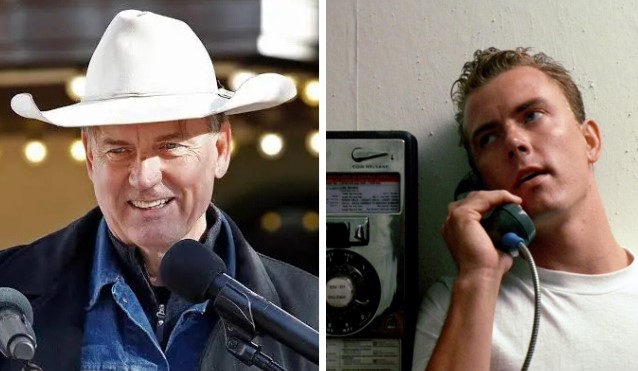
Barry Tubb is an American actor and director whose work connects him to some memorable productions in film and television. He is widely recognized for appearing in Top Gun, the iconic 1986 aviation drama, and for his role in The Legend of Billie Jean. His career reflects a mix of film appearances, television work, and creative experience behind the camera. Although he has not maintained the same level of public visibility as some of Hollywood’s biggest stars, his performances remain familiar to fans of classic American cinema. His association with Top Gun is particularly significant because the film became a lasting part of popular culture. Beyond that recognizable credit, Barry Tubb’s professional story offers a closer look at an actor whose career spans different kinds of screen productions.
Quick Bio
| Detail | Information |
|---|---|
| Full Name | Barry Tubb |
| Known For | Top Gun, The Legend of Billie Jean |
| Profession | Actor and director |
| Nationality | American |
| Birth Date | Not reliably documented in authoritative public sources |
| Birthplace | Texas, United States, according to biographical accounts |
| Education | Detailed information is limited |
| Famous Connection | Top Gun and its ensemble cast |
| Marital Status | Not reliably documented in authoritative public sources |
| Children | Not reliably documented in authoritative public sources |
| Current/Public Status | Public information about his recent activities is limited |
Who Is Barry Tubb?
Barry Tubb, whose full name is Barry York Tubb, is an American actor, director, writer, and producer who developed his career across television and film. His screen credits include dramas, Westerns, independent films, and major studio productions. Rather than relying on one type of role, he worked across different genres and gradually expanded his involvement in filmmaking.
His performance as Wolfman in Top Gun remains one of the most recognizable entries in his filmography. However, his career also includes substantial television work, particularly in Western productions that drew on the American landscapes and traditions familiar from his Texas upbringing.
Tubb’s professional history is notable for the transition from acting in front of the camera to taking on creative responsibilities behind it. His work as a director and writer demonstrates an interest in developing stories as well as performing in them.
Early Life in Snyder, Texas
Barry Tubb was born on February 13, 1963, in Snyder, Texas. He grew up in a part of the state where rodeo culture and Western traditions formed an important part of local life. Before pursuing acting, he developed experience in competitive rodeo activities, including bull riding.
Biographical accounts describe Tubb as an accomplished junior bull rider who won a championship during his teenage years. This background later became an interesting part of his public identity, particularly because several of his acting projects involved Western settings and characters.
After graduating from Snyder High School in 1981, Tubb moved to San Francisco for theater training. That decision marked a significant change from his earlier interests and provided a foundation for his eventual move into professional screen acting.
His journey from a small Texas community to the entertainment industry was not simply a move between locations. It represented a shift from competitive rodeo toward performance, storytelling, and the collaborative work involved in making films and television programs.
How Barry Tubb Began His Acting Career
Tubb’s early professional credits included television and film work during the 1980s. One of his early screen appearances came in Christine (1983), the horror film directed by John Carpenter. Although the role was small, it placed him on a path toward further opportunities in the industry.
He subsequently appeared in the television series Bay City Blues and Hill Street Blues. These projects helped him gain experience with television production and introduced him to the demands of working on ensemble casts.
During this period, television offered opportunities for emerging actors to develop their skills through recurring characters and different kinds of dramatic material. Tubb’s early work included crime stories and character-driven productions, giving him experience beyond the action-oriented roles for which some viewers would later remember him.
By the middle of the decade, he had begun building a film résumé that included Mask and The Legend of Billie Jean. These projects helped establish his presence in Hollywood before his appearance in Top Gun.
Barry Tubb’s Breakthrough in Top Gun
Released in 1986, Top Gun became a defining action film of its era. The story follows naval aviators training at an elite fighter-pilot school, combining aerial sequences with competition, personal relationships, and military drama.
Tubb played Wolfman, a fighter-pilot trainee who belongs to the film’s wider group of naval aviation characters. Although he was not the central character, his contribution helped populate the training environment that gives the story its competitive atmosphere.
The film starred Tom Cruise as Pete “Maverick” Mitchell and featured an ensemble that included Val Kilmer, Anthony Edwards, and Tom Skerritt. Tubb’s role placed him within a cast that became closely associated with one of the most recognizable aviation films in American popular culture.
The lasting popularity of Top Gun has kept interest in its supporting performers alive. Audiences who revisit the original film often look beyond its leading stars to discover the actors who helped create the squadron’s distinctive atmosphere.
For Tubb, Wolfman remains an important career credit, but it represents only one part of a broader professional history.
His Role in The Legend of Billie Jean
Before Top Gun, Tubb appeared in The Legend of Billie Jean (1985), a drama centered on a teenage girl who becomes the focus of public attention after a conflict develops into a larger confrontation with authority.
Tubb played Hubie in the film, which starred Helen Slater and also featured Keith Gordon and Christian Slater. The production combined youthful rebellion with themes of fairness, public perception, and resistance to social pressure.
The film occupies an interesting place in Tubb’s early career because it demonstrates that his screen work extended beyond military and Western stories. He participated in projects with different themes and audiences, building experience during a formative period in his acting life.
His appearance in the film, followed by his role in Top Gun, also illustrates how quickly his early filmography developed during the mid-1980s.
From Supporting Film Roles to Television Dramas
Tubb continued working in both film and television after Top Gun. His credits include The Billionaire Boys Club, a dramatization involving wealthy young businessmen and a criminal scheme, as well as the films Warm Summer Rain, Valentino Returns, and Guilty by Suspicion.
In these productions, he took on supporting roles that contributed to stories centered on larger casts and more prominent lead characters. Such work is a common but important part of a long acting career, requiring performers to adapt to different directors, scripts, and production environments.
He also returned to television throughout his career. His appearances in dramatic programs allowed him to work in formats that differed from theatrical films, where character development and storytelling often unfold over multiple episodes.
Rather than being defined exclusively by one blockbuster, Tubb’s filmography reflects steady participation in a variety of productions. That breadth helps explain why his career appeals to viewers researching both classic Hollywood films and American television drama.
Barry Tubb as Jasper Fant in Lonesome Dove
One of Tubb’s most significant television roles came in Lonesome Dove (1989), the acclaimed Western miniseries adapted from Larry McMurtry’s novel. He played Jasper Fant, a character within a story about former Texas Rangers, frontier life, and a cattle drive across the American West.
The miniseries starred Robert Duvall and Tommy Lee Jones and earned lasting recognition for its performances and expansive portrayal of the frontier. It helped renew interest in the Western genre at a time when the traditional Western had become less dominant in mainstream entertainment.
Tubb returned as Jasper Fant in Return to Lonesome Dove (1993), continuing his association with the fictional world of the original production.
These roles are particularly relevant to his career because they brought together his acting experience and his familiarity with Texas culture. While a performer’s background does not automatically determine the quality of a performance, Tubb’s connection to the region gave this part of his career a distinctive personal context.
His Work in American Outlaws and Other Films
Tubb’s later film credits include American Outlaws (2001), a Western adventure featuring a dramatized account of Jesse James and his gang. He played Captain Malcolm in the film, continuing his involvement in stories shaped by American history and frontier mythology.
In 2005, he appeared in The Three Burials of Melquiades Estrada, a drama directed by and starring Tommy Lee Jones. The film explores friendship, responsibility, and life along the Texas-Mexico border.
He also appeared in Temple Grandin (2010), a television biographical drama about scientist and animal-behavior expert Temple Grandin. The project differed considerably from the action films and Westerns associated with some of his other credits.
These productions illustrate the variety of settings in which Tubb worked. His filmography encompasses contemporary drama, historical stories, independent cinema, and television films, rather than following a single, narrowly defined genre.
Barry Tubb’s Career Behind the Camera
Acting was not Tubb’s only contribution to the entertainment industry. He also explored writing, directing, and producing, giving him opportunities to participate in filmmaking beyond his on-screen performances.
One of his projects was Grand Champion (2002/2004, depending on the release listing), a family-oriented film involving a young boy and his determination to win a livestock competition. Tubb received writing and directing credits associated with the production, which drew on rural themes and the world of competitive livestock shows.
He also worked on Blood Trail and Clown Hunt. These projects demonstrate his interest in developing stories and managing the creative decisions involved in bringing a production to the screen.
Independent filmmaking can involve different challenges from working on a major studio production. Directors often have to balance creative choices with limited resources, schedules, and practical production requirements. Tubb’s behind-the-camera credits show that his professional interests extended into this side of the industry.
His Connection to Texas Through Film
Texas has remained an important thread running through Tubb’s professional identity. His upbringing in Snyder, early rodeo experience, and work on Western-themed productions have helped distinguish his career from that of actors whose public identities revolve primarily around Hollywood.
His participation in projects such as Lonesome Dove, Return to Lonesome Dove, American Outlaws, and The Three Burials of Melquiades Estrada placed him in stories connected to the American West and the Texas region.
This recurring connection does not mean that every role he accepted reflected his personal background. Instead, it shows how a regional identity can become part of the public narrative surrounding a performer, especially when the actor repeatedly appears in productions with similar settings.
For readers interested in Tubb, his Texas roots provide useful context for understanding the range of projects that have shaped his career.
Who Is Tom Cruise, and Why Is He Connected to Barry Tubb?
Tom Cruise is an American actor and producer whose career includes major action films, dramatic performances, and long-running collaborations with prominent directors. He became the central star of Top Gun, playing naval aviator Pete “Maverick” Mitchell in the original 1986 film.
Cruise’s career later returned to the franchise with Top Gun: Maverick (2022), which revisited Maverick’s life and introduced a new generation of pilots while bringing back elements of the original story. The sequel achieved major commercial success and renewed public interest in the earlier film and its cast.
Barry Tubb’s connection to Cruise is professional rather than familial: both were associated with the original Top Gun. Cruise played the leading role, while Tubb portrayed Wolfman, one of the supporting characters in the fighter-pilot training environment. Their connection matters because the original film remains a major reference point in discussions of Tubb’s acting career.
In 2024, Tubb filed a lawsuit against Paramount Pictures concerning the alleged unauthorized use of his likeness in Top Gun: Maverick. The dispute brought renewed attention to his participation in the original film and raised questions about the use of performers’ likenesses in later productions. The existence of a lawsuit does not, by itself, establish that the allegations were proven.
Barry Tubb’s Work in Independent Cinema
Independent cinema represents another part of Tubb’s professional history. Films such as Baghdad, Texas (2009), Dear Sidewalk (2013), and Two Step (2014) show his continued involvement in smaller-scale productions.
Two Step, a crime drama, featured Tubb as Horace. The film focuses on a young man’s involvement in a dangerous situation and the consequences that follow. Its more intimate storytelling differs from the large-scale spectacle of Top Gun.
Independent films often place greater emphasis on character relationships and regional settings than on elaborate action sequences. Tubb’s participation in these productions demonstrates his continued interest in varied stories and filmmaking environments.
His career therefore cannot be understood solely through the films that achieved the greatest commercial recognition. The smaller projects also form part of the record of his professional work.
Barry Tubb’s Acting Style and Screen Presence
Tubb’s roles have varied in size and genre, making it difficult to reduce his acting career to a single character type. His filmography includes military trainees, Western characters, supporting dramatic roles, and appearances in television productions.
In Top Gun, his role contributed to the ensemble dynamic rather than carrying the main storyline. In Lonesome Dove, he worked within a character-driven Western narrative, while his later independent film credits placed him in different dramatic settings.
Supporting performers help establish the world in which a leading character operates. They can make a fictional military unit, family, workplace, or community feel more complete without dominating the story. Tubb’s career illustrates this aspect of screen acting.
His additional work as a director and writer also distinguishes him from performers whose credits remain limited to acting. It suggests a broader professional involvement in film production, although the specific creative contributions differ from project to project.
Personal Life, Family, and Privacy
Public information about Barry Tubb’s private life is limited compared with the material available about his professional career. Although biographical accounts describe his Texas upbringing and early interest in rodeo, reliable details about his marital status, children, and other family relationships are not consistently documented in widely available authoritative sources.
It would therefore be misleading to present unverified claims about his family or relationships as established facts. His professional filmography provides a much clearer record than his private life.
This distinction matters when researching actors who have maintained a relatively low public profile. A lack of publicly available information does not establish that someone has no family, personal interests, or activities outside their career.
For readers interested in Barry Tubb, the most dependable picture comes from his acting credits, directing work, and documented professional history.
Barry Tubb’s Net Worth and Financial Life
Barry Tubb’s current net worth has not been established by a reliably documented public financial disclosure. Online estimates should be treated cautiously because they often lack transparent calculations or verified information about an individual’s earnings, investments, property, and expenses.
His work in studio films, television productions, and independent cinema provides evidence of a sustained professional career, but film credits alone cannot establish personal wealth.
An actor’s compensation can vary considerably according to the size of a role, the terms of a contract, residual payments, and other factors. Directing, writing, and producing may also involve different payment arrangements.
Without reliable financial records, assigning Tubb a precise net worth would create a false impression of certainty. His career achievements can be assessed through documented work without relying on speculative financial figures.
Where Is Barry Tubb Today?
Barry Tubb has maintained a comparatively low public profile in recent years. His widely listed acting credits include Two Step (2014), while his earlier work spans several decades of film and television production.
Limited recent public information makes it difficult to provide a definitive account of his current activities, residence, or personal circumstances. It would be inappropriate to assume that he has retired entirely or stopped pursuing creative projects simply because newer screen credits are less prominent in widely available filmographies.
His involvement in the legal dispute concerning Top Gun: Maverick also demonstrated that his connection to the original film remained relevant long after its initial release.
For now, his documented screen work remains the clearest way to understand his place in American entertainment. His career includes a recognizable blockbuster role, respected television productions, and a body of work that extends into independent filmmaking.
Conclusion
Barry Tubb’s career reflects the path of an American actor who built a varied professional record through film, television, and work behind the camera. From his Texas upbringing and early rodeo experience to his appearances in The Legend of Billie Jean, Top Gun, and Lonesome Dove, his professional story combines regional roots with decades of screen work.
His role as Wolfman connected him to Tom Cruise and the original Top Gun, a film whose popularity continues to generate interest in its supporting cast. Yet Tubb’s identity as a performer extends beyond that association, encompassing Western dramas, independent productions, directing, and writing.
Although many aspects of his private life remain undocumented publicly, his professional credits provide a clear basis for understanding his contribution to the entertainment industry. Barry Tubb’s story is ultimately one of versatility, a Texas background, and a career that reached across multiple forms of American filmmaking.
FAQs
Who is Barry Tubb?
Barry Tubb is an American actor, director, writer, and producer. He is recognized for playing Wolfman in Top Gun and for appearing in productions such as The Legend of Billie Jean and Lonesome Dove.
How old is Barry Tubb?
Barry Tubb was born on February 13, 1963. As of October 2026, he is 63 years old.
What role did Barry Tubb play in Top Gun?
Tubb played Wolfman, a fighter-pilot trainee in the original 1986 film. His character was part of the ensemble surrounding Tom Cruise’s lead character, Maverick.
Is Barry Tubb related to Tom Cruise?
There is no reliably documented family relationship between Barry Tubb and Tom Cruise. Their professional connection comes from their appearances in the original Top Gun, in which Cruise played Maverick and Tubb portrayed Wolfman.
Has Barry Tubb directed any films?
Yes. Tubb has directing credits on projects including Grand Champion, Blood Trail, and Clown Hunt. He has also received writing credits on several productions.
What is Barry Tubb’s net worth?
A verified current net worth for Barry Tubb is not publicly established. Figures published without transparent financial evidence should be considered estimates rather than confirmed facts.
What is known about Barry Tubb’s life today?
Tubb has maintained a relatively low public profile in recent years. His filmography documents his earlier acting and directing work, but detailed information about his current personal life and activities remains limited.
For More Visit: Hyper Pop
